
Introduction
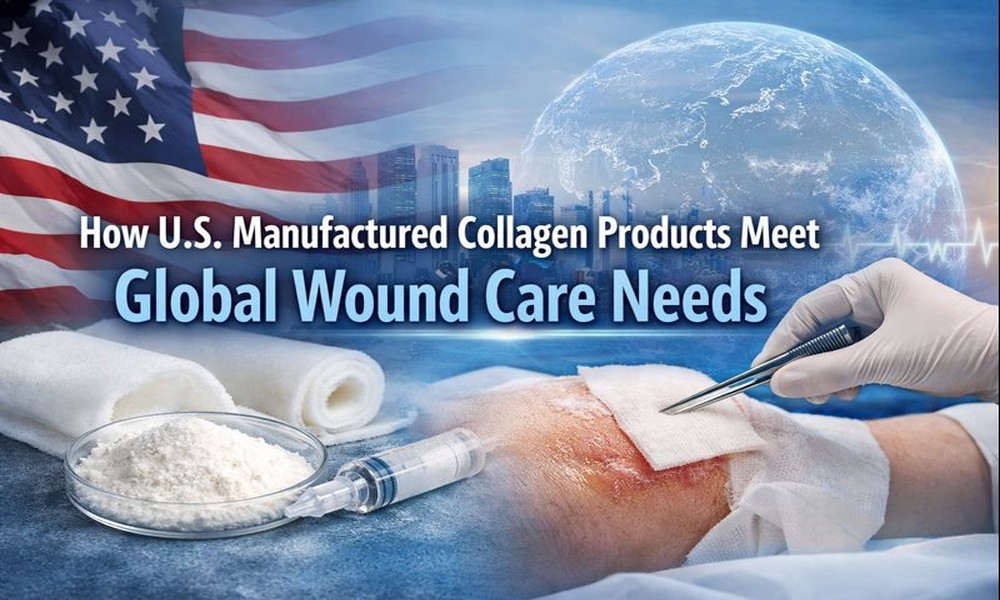
Global wound care requirements are expanding as healthcare systems address rising cases of chronic wounds, surgical interventions, and trauma related injuries. To meet these challenges, clinicians and procurement teams increasingly rely on advanced wound care solutions that deliver consistent clinical outcomes and comply with international quality standards. U.S. manufactured collagen products have emerged as a preferred option due to their reliability, regulatory alignment, and proven role in wound healing.
Role of Collagen in Modern Wound Care
Collagen is a fundamental protein involved in the body’s natural wound healing process. It supports cell migration, promotes granulation tissue formation, and helps maintain an optimal wound environment. In advanced wound care, collagen based products actively support healing rather than serving only as passive wound coverings. This makes them particularly effective for managing chronic wounds where delayed healing and tissue degradation are common.
Manufacturing Quality and Process Control
One of the primary advantages of U.S. manufactured collagen products is the emphasis on strict manufacturing controls. These products are developed under comprehensive quality management systems that ensure consistency, traceability, and safety. Such controls are critical for hospitals and healthcare providers that require dependable wound care solutions across multiple clinical settings. Consistent manufacturing also supports long term supply stability for international distributors and healthcare brands.
Regulatory Alignment and Global Acceptance
U.S. regulatory frameworks are widely recognized across international markets. Collagen products manufactured in the United States often meet or exceed the documentation and compliance requirements expected by healthcare authorities worldwide. This regulatory alignment simplifies product approval processes and increases confidence among procurement teams, making U.S. manufactured collagen products suitable for global distribution and hospital use.
Clinical Versatility Across Wound Types
U.S. manufactured collagen products are designed to address a wide range of wound indications. They are commonly used in the management of diabetic foot ulcers, pressure injuries, venous leg ulcers, surgical wounds, burns, and trauma related injuries. Availability in multiple formats such as sheets, particles, and gels allows clinicians to select appropriate solutions based on wound characteristics and treatment objectives, supporting effective wound management across diverse healthcare environments.
Supporting Global Healthcare Systems
Healthcare systems worldwide are under pressure to improve patient outcomes while managing costs. Collagen based wound care products contribute to this goal by supporting faster healing, reducing complication risks, and potentially shortening treatment duration. These benefits align with outcome driven care models and make collagen products a practical choice for both developed and emerging healthcare markets.
OEM and Private Label Capabilities
U.S. manufacturers such as Human Biosciences support global wound care needs through OEM and private label manufacturing. This enables international healthcare brands to expand their wound care portfolios while maintaining consistent quality and regulatory compliance. Reliable manufacturing partnerships play a key role in meeting sustained global demand.
Conclusion
As global wound care demands continue to rise, U.S. manufactured collagen products provide a dependable and scalable solution. Through strong manufacturing controls, regulatory alignment, and clinical versatility, these products effectively meet the needs of healthcare providers worldwide and support the ongoing evolution of advanced wound care standards.